09.12.2025
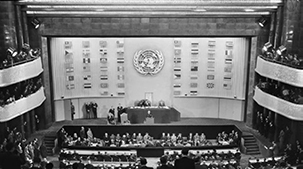
On December 9, 1948, the United Nations General Assembly adopted the Convention on the Prevention and Punishment of the Crime of Genocide. This document was born from the deep shocks to the conscience of humanity recorded as a result of the most brutal events of the first half of the 20th century, particularly the Armenian Genocide perpetrated during the First World War, as well as the horrors of the Holocaust during the Second World War.
The adoption of the Genocide Convention was an exceptional event in human history, which became the legal basis for the prevention and condemnation of genocide, raising humanity's responsibility towards its own past and future.
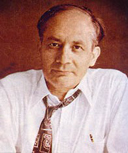
At the core of the Convention's ideological and legal origins stands the figure of lawyer Raphael Lemkin—a man who dedicated his entire life to the cause of enshrining the idea of recognition, prevention, and punishment of the crime of genocide at the level of international law.
Lemkin's personal experience, as well as the historical cases he studied in detail—especially the Armenian Genocide—played a decisive role in the formation of the concept of genocide and its international recognition. It is noteworthy that he specifically emphasizes that the suffering of Armenian men, women, and children thrown into the Euphrates River or slaughtered on the road to Der Zor paved the way for the adoption of the Genocide Convention by the United Nations.
For Lemkin, the Armenian Genocide became a classic example of how a national, ethnic, or religious group is completely destroyed as a result of actions planned and implemented at the state level. Lemkin was among the first who dared to define this crime at a scientific and legal level, calling it "Genocide" and clearly highlighting the specifics, purpose, and consequences of that crime.
The Convention adopted on December 9, 1948, based on Lemkin's concept, became the first international legal document that not only internationally defined the concept of genocide but also the international obligation for its prevention and punishment. The Convention established for the first time that genocide is not merely a domestic matter of a state, but an international crime, the prevention and punishment of which are a universal issue.
This was a major step in the direction that the gravest crimes against humanity cannot be approached with silence or indifference, and that the tragedies of the past must serve as a warning for the future. However, the adoption of the Convention did not automatically solve all problems of genocide prevention and punishment. To this day, the world continues to face new genocidal crimes, ethnic cleansing, mass killings, and violence.
At the same time, the role of the Convention in the prevention of genocide is invaluable, as it created an international legal system where states are obliged not only not to commit such crimes but also to prevent them and punish those responsible.
The adoption of the Convention also became an indicator of civilizational maturity at the international level, showing that humanity, having passed through terrible trials, is capable of learning lessons from its history and promoting universal values: the protection of human rights and the supremacy of dignity and the right to life. However, that maturity is constantly put to the test, as political, economic, and ideological interests still persist in the world, often hindering the full prevention of genocidal crimes and holding the perpetrators accountable.
In the photo: The United Nations General Assembly hall at the Palais de Chaillot, Paris, December 1948:
https://www.annefrank.org/en/timeline/123/the-united-nations-adopts-the-genocide-convention/.