10.04.2026
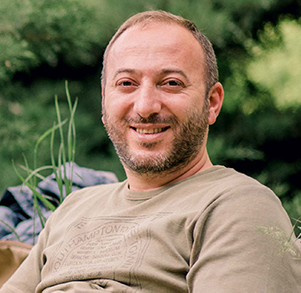
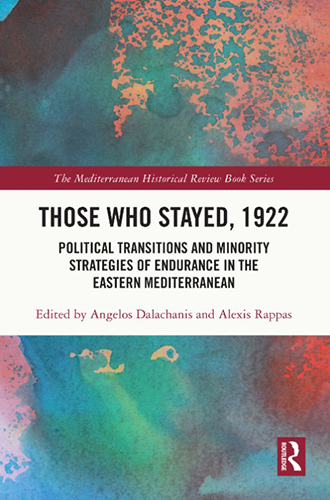
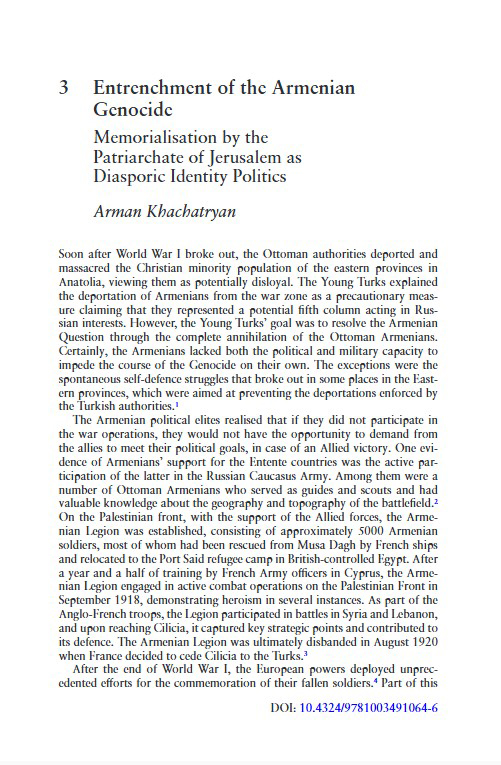
The Armenian Genocide Museum-Institute is pleased to announce that a chapter by AGMI researcher Dr. Arman Khachatryan, titled “Entrenchment of the Armenian Genocide Memorialisation by the Patriarchate of Jerusalem as Diasporic Identity Politics”, has been published in the Routledge volume Those Who Stayed, 1922: Political Transitions and Minority Strategies of Endurance in the Eastern Mediterranean (eds. Angelos Dalachanis & Alexis Rappas), indexed in the Web of Science.
This chapter examines the memory politics and commemoration practices of the Armenian community in post-Genocide Palestine, highlighting the role of the Armenian Patriarchate of Jerusalem. Following the Armenian Genocide during World War I, during which the Ottoman Empire systematically annihilated its Armenian population, the Armenian community in Palestine—predominantly made up of genocide survivors—engaged in the strategic preservation of the memory of the Armenian fallen soldiers and the victims of the Genocide. This was meant to assert their identity and become masters of their historical narrative within the complex socio-political landscape of the British Mandate and later the State of Israel. The Patriarchate's efforts played a pivotal role in transforming the notion of victimhood into one of endurance. The chapter thus integrates narratives of minor, heroic victories into the broader diasporic identity politics, taking into account the ethnopolitical and sociocultural context of the time. This chapter highlights how these commemorative practices not only pay tribute to past sacrifices but also entrench a collective memory that contributes to the Armenian community's resilience and visibility as a minority in Palestine.
The full text is available here:
https://www.academia.edu/144502981/Entrenchment_of_the_Armenian_Genocide_Memorialisation_by_the_Patriarchate_of_Jerusalem_as_Diasporic_Identity_Politics.