18.04.08
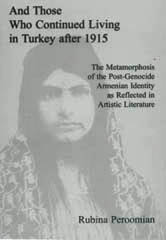
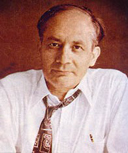
The Armenian Genocide Museum-Institute presents the book titled “And Those Who Continued Living in Turkey after 1915” by Rubina Peroomian, which issued under the auspices of the AGMI publishing-house.
The book is about the Metamorphosis of the Post-Genocide Armenian Identity as Reflected in Artistic Literature.
In the atmosphere of the precariousness of minority rights in Turkey and government's persistence in denying the existence of the Armenian issue as well as its continuing policy of pressure and selective approach to history, a prescribed national identity covering all ethnic groups in Republican Turkey was enforced and the Armenian collective suffering of the past was buried in silence.
With the recent political developments in the world, the wall of silence is breached. The events of 1915 and the plight of the Armenian survivors in Turkey, be they Christian, Islamized, or hidden, are espoused and fictionalized in literature produced in Turkey. Artistic expressions echo the continuing trauma in the life of these "rejects of the sword," a Turkish moniker for Armenians, having "undeservedly" escaped from death. The stories that Turkish writers unearth and the daring memoirs of Turkish citizens with an Armenian in their ancestry, as well as obscured references to these same stories and events in Turkish-Armenian literature, have unveiled the full picture of survival, with an everlasting memory of the lost ones, but also of forced conversions, of nurturing the "enemy" in the bosom, and of the dehumanization and sexual torture of men and women. A multifaceted image, an identity, of what is broadly generalized as Turkish-Armenian, thus emerges, a phenomenon that contradicts the long-researched and explored concept of the Diasporan-Armenian post-Genocide ethnic identity. Nevertheless, the sociopolitical and religious impositions and the hegemony of Muslim identity have not been fully challenged yet. Outside pressures may influence the metamorphosis of Turkish state of mind, but the change should come from within the Turkish society. The change may be underway.
This annotation was taken from the book “And Those Who Continued Living in Turkey after 1915” by Rubina Peroomian.