Home Map E-mail
 
Eng |  Հայ |  Türk |   Рус   

Home
Main
Delegations
Site map
Feedback
Contacts
Links
Pre-Genocide Armenia
History of Armenia
Pre-Genocide photos
Armenian Genocide
What is Genocide
Armenian Genocide
Chronology
Photos of Armenian Genocide
Mapping Armenian Genocide
Cultural Genocide
Remember
Documents
American
British
German
Russian
French
Austrian
Turkish

Research
Bibliography
Survivors Stories
Eye-Witnesses
Media
Quotations
Public Lectures
Recognition
States
International organizations
Provincial governments
Public petitions
Mission Statement
Director`s message
Press-releases
Museum G-Brief
Interviews
News
Conferences
Events of AGMI
Lemkin scholarship new
Most Read new
   Museum
Museum Info
Plan a visit
Permanent exhibition
Temporary exhibition
Online exhibition   new
Memorial postcards  new
   Institute
Goals & Endeavors
Publications
Library
AGMI collection
   Tsitsernakaberd Complex
Description and History
Memorial complex photos
Remembrance day
Friends of AGMI Foundation
 

Armenian General Benevolent Union
All Armenian Fund
National Academy of Sciences of Armenia
Public Radio of Armenia
Armenian News Agency
ARMEDIA  Information, Analytical Agency
Inhomage
armtown
armin
armin
armin
armin


Permanent exhibition


The first exhibit hall of Armenian Genocide Museum
The Museum exhibition halls occupy a space just over 1000 square meters.
They are split up into three indoor halls and one outdoor gallery.

The western wall of the Museum's first exhibit hall has a map, nine meters wide and five meters high, engraved in stone, which illustrates the Armenian Plateau and neighboring countries. It clearly depicts Armenia being bordered by the Black Sea to the North, the Caspian Sea to the East, the Iranian Plateau to the South, and the Mediterranean Sea in the Southwest. The map also illustrates the Armenian settlements on the territory of Western Armenia and Ottoman Empire as they existed until the systematic death marches, which began in 1915.
The Introductory Hall exhibits photographs and demographic tables with information about the Armenian settlements and populations circa 1914 in Ottoman Turkey. The content also portrays information on the number of Armenian churches and schools which were functioning in the region at that time. Photo materials in exhibition tables present the peaceful life of Armenian population before Genocide.


The second exhibit hall of Armenian Genocide Museum
The second exhibit hall (700 square meters) presents eyewitness reports and documents about the massacres and atrocities perpetrated against the Armenians. The exhibit has many large photographs taken during 1915-1917, archival documents, portraits of prominent Armenians, victims of the atrocities, friends of the Armenian people, and documentary films.

The tables displayed in the third hall compare the Armenian population figures in 1914 and 1922 and also define the number of people deported and killed.

A special part of the exhibit is reserved for the original documents issued by international organizations and parliaments of foreign countries condemning the Armenian Genocide.
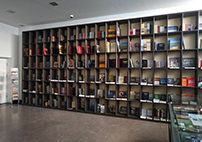
Various publications about the Armenian Genocide written in many languages are also exhibited here.
This hall also contains population data about the number of Armenians living in Europe, Asia, Africa, the Americas and Australia after the Genocide. In the same hall, granite pedestals support crystal vases which hold earth from historic Armenian regions: Karin (Erzerum), Van, Baghesh (Bitlis), Sebastia (Sivas), Kharpert and Tigranakert (Diarbekir). Here you will also find a granite tree with its branches spread symbolizing eternity and the rebirth of Armenian people.


The second exhibit hall of Armenian Genocide Museum
The last hall of the Museum is essentially an outdoor patio, a traditional feature found in old Armenian structures. A semicircular basalt wall, divided into twelve equal segments has enscribed statements condemning the Armenian Genocide by prominent foreign politicians, diplomats, scientists, and writers circa 1915. The hall looks like a courtroom where eyewitnesses “present” their condemning evidence.
The last word belongs to the visitor.


The third exhibit hall of Armenian Genocide Museum
There is also an art gallery, named after famous French-Armenian painter Jansem (Hovaness Semerjian) holds temporary exhibitions.


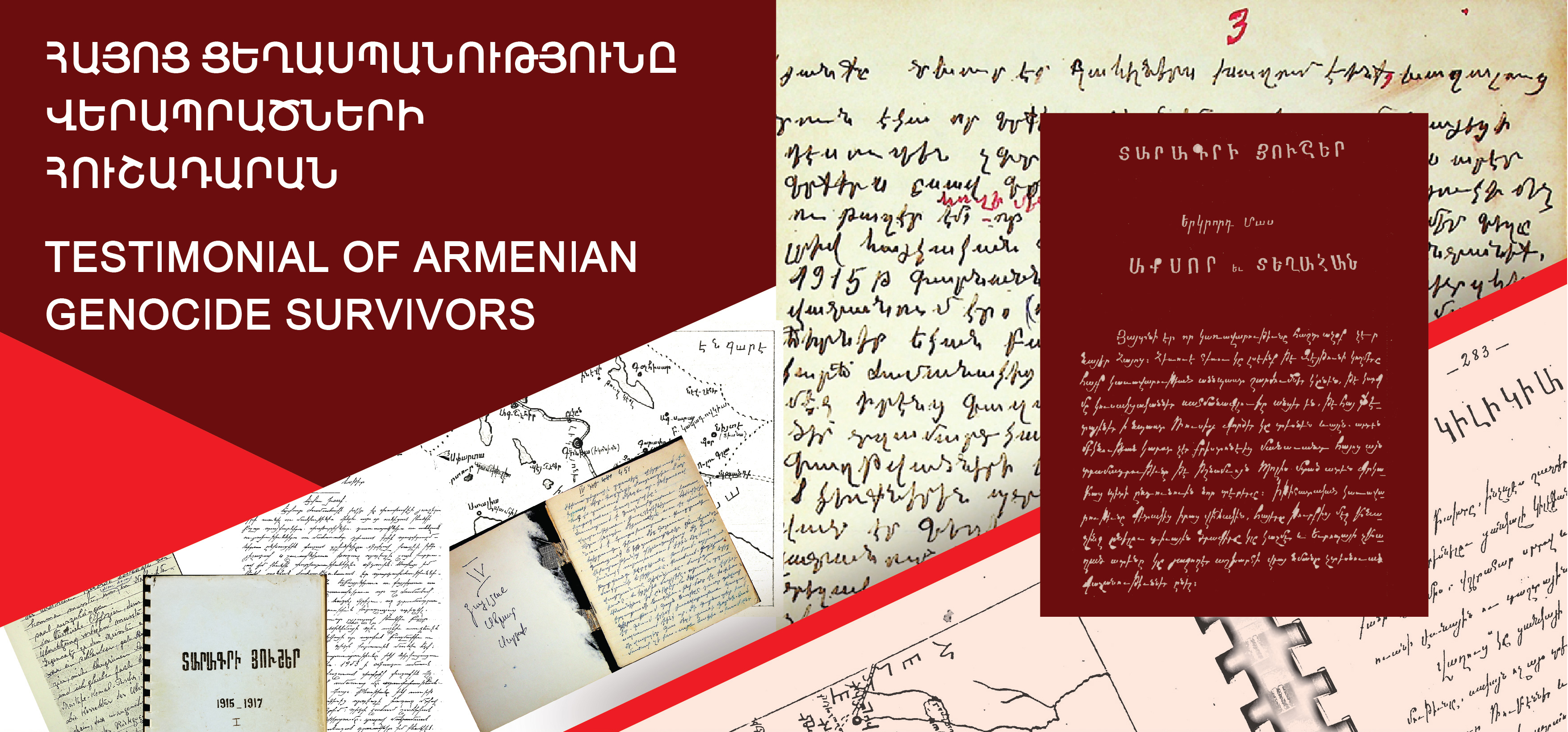
Virtual Museum

International Conference

genocide
On April 20, 21, 2011, AGMI organizes an international conference "Armenian Genocide and Scandinavian response" dedicated to the 150th anniversary of Fridtjof Nansen.

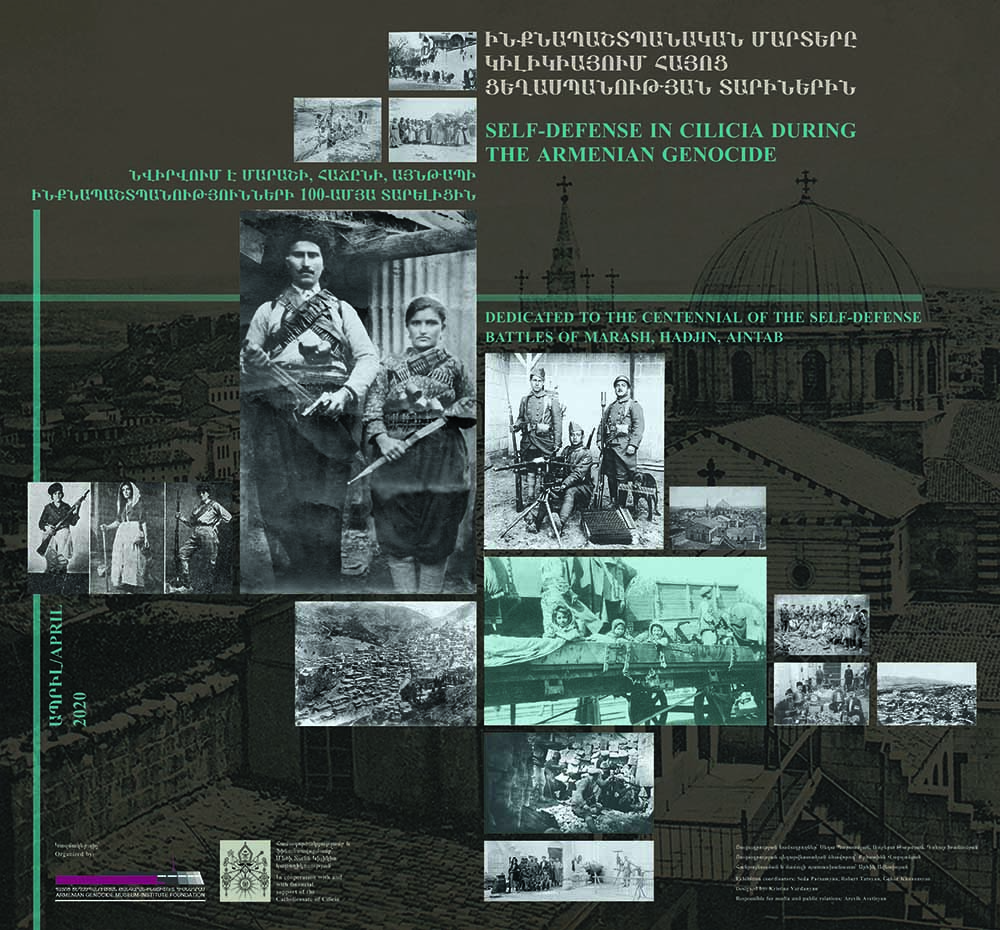
Temporary Exhibition

exhibition
"ARMENIAN GENOCIDE AND SCANDINAVIAN RESPONSE"

Remember

remember
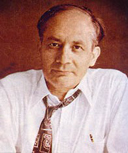
Haykazn Mihrdat was born in 1864 in Constantinople (Ottoman Empire), social-political figure, national deputy, president of the “Aharonyan akumb” (Aharonyan club) in Peshiqtash. He was a victim of the Armenian genocide.

Lemkin scholarship   new

Lemkin

Events of AGMI

November 10, 2011On November 9, 2011, the granddaughter of Fridtjof Nansen Marit Greve, with the Norwegian delegation, visited Tsitsernakaberd Memorial Complex ...

November 10, 2011On November 7, 2011, Asya Darbinyan, a graduate research fellow at the Armenian Genocide Museum-Institute, recently spent four days at the Armenian Research Center conducting research for her dissertation on Near East Relief orphanages ...

November 9, 2011On November 6, 2011, Grand Duchess Maria Vladimirovna Head of the Russian Imperial House visited Tsitsernakaberd Memorial Complex, put flowers at the eternal fire and honored the memory of the innocent victims with a minute of silence ...

October 25, 2011On October 25, 2011, the newly appointed U.S. Ambassador to Armenia John A. Heffern accompanied by his spouse Mrs. Libby Dowling Heffern, visited ...

October 13, 2011 On October 13, 2011, Secretary General of Interpol Ronald Noble visited Tsitsernakaberd Memorial Complex and put flowers at the memorial of the Armenian Genocide victims ...

August 31, 2011 On August 30, 2011, the regular meeting of the MFA senior staff and the heads of the diplomatic missions started in the Conference Hall of the K. Demirjian Sports and Concert Complex ...

August 27, 2011 Dr. Hayk Demoyan, director of the Armenian Genocide Museum-Institute, has become a new member of the Genocide Education Project’s (GenEd) advisory board ...

July 11, 2011 Fanny Ardant, the world known French actress, who visited Yerevan in the framework of the 8th edition of “Golden Apricot” Yerevan International Film Festival, visited Tsitsernakaberd Memorial ...

June 30, 2011 Director of AGMI H.Demoyan and Deputy Director of AGMI S.Manukyan had a meeting with ambassador of RA in Russia Oleg Yesayan in Moscow. During the meeting the projects and cooperation ...

June 17, 2011 Minister of French Cooperation Henri de Raincourt visited Tsitsernakaberd Memorial Complex, within the framework of his official visit to Armenia on June 16-17, and put a wreath at the memorial of the Armenian Genocide victims ...

June 17, 2011 The delegation headed by President of Brest Regional Executive Committee in Belarus Konstantin Sumar visited Tsitsernakaberd Memorial Complex. Mr. Konstantin Sumar put a wreath at the memorial of the Armenian Genocide victims ...

June 10, 2011 Thomas O. Melia, Deputy Assistant Secretary of USA, Bureau of Democracy, Human Rights, and Labor visited Tsitsernakaberd Memorial Complex, put flowers at the eternal fire ...

June 09, 2011 Dr. Ara Sanjian, the Associate Professor in Armenian and Middle Eastern History from University of Michigan - Dearborn had a meeting in the Armenian Genocide Museum & Institute with the staff of AGMI ...

June 01, 2011 The deputy-director of AGMI Suren Manukyan participated on conference dedicated to 150th anniversary of Fridtjof Nansens held in a city of Kharkiv, Ukraine ...

RA, Yerevan 0028
Memorial Complex of Tsitsernakaberd
Tel.: (374 10) 39 09 81
Fax: (374 10) 39 10 41
    2007-2011 © Armenian Genocide Museum-Institute     e-mail : info@genocide-museum.am