Home Map E-mail
 
Eng |  Հայ |  Türk |   Рус   

Home
Main
Delegations
Site map
Feedback
Contacts
Links
Pre-Genocide Armenia
History of Armenia
Pre-Genocide photos
Armenian Genocide
What is Genocide
Armenian Genocide
Chronology
Photos of Armenian Genocide
Mapping Armenian Genocide
Cultural Genocide
Remember
Documents
American
British
German
Russian
French
Austrian
Turkish

Research
Bibliography
Survivors Stories
Eye-Witnesses
Media
Quotations
Public Lectures
Recognition
States
International organizations
Provincial governments
Public petitions
Mission Statement
Director`s message
Press-releases
Museum G-Brief
Interviews
News
Conferences
Events of AGMI
Lemkin scholarship new
Most Read new
   Museum
Museum Info
Plan a visit
Permanent exhibition
Temporary exhibition
Online exhibition   new
Memorial postcards  new
   Institute
Goals & Endeavors
Publications
Library
AGMI collection
   Tsitsernakaberd Complex
Description and History
Memorial complex photos
Remembrance day
Friends of AGMI Foundation
 

Armenian General Benevolent Union
All Armenian Fund
National Academy of Sciences of Armenia
Public Radio of Armenia
Armenian News Agency
ARMEDIA  Information, Analytical Agency
Inhomage
armtown
armin
armin
armin
armin


International organisations


International Center for Transitional Justice (ICTJ) Report Prepared for TARC

February 10, 2003

The Applicability of the United Nations Convention on the Prevention and Punishment of the Crime of Genocide to Events which Occurred During the Early Twentieth Century

At diplomatic platforms Turkish officials and their advocates claim that they recognize the “big tragedy” and they only object to its being named as “Genocide”. That’s not true. At every occasion in Turkey not only the Armenian Genocide, but also the great agony of the Armenian people is denied and attempts are made to justify the genocide.

Legal Analysis Prepared for the International Center for Transitional Justice

The Turkish Armenian Reconciliation Commission (TARC), formed July 9, 2001, by Turkish and Armenian civil society representatives, requested that the International Center for Transitional Justice (ICTJ) facilitate an independent legal study on the applicability of the 1948 Genocide Convention to events which occurred during the early twentieth century. On February 4, 2003, ICTJ provided TARC the following analysis on the subject. This analysis was issued to the public by TARC on February 10, 2003.

EXECUTIVE SUMMARY OF LEGAL CONCLUSIONS

International law generally prohibits the retroactive application of treaties unless a different intention appears from the treaty or is otherwise established. The Genocide Convention contains no provision mandating its retroactive application. To the contrary, the text of the Convention strongly suggests that it was intended to impose prospective obligations only on the States party to it. Therefore, no legal, financial or territorial claim arising out of the Events could successfully be made against any individual or state under the Convention.

The term genocide, as used in the Convention to describe the international crime of that name, may be applied, however, to many and various events that occurred prior to the entry into force of the Convention. References to genocide as a historical fact are contained in the text of the Convention and its travaux preparatoires.

As it has been developed by the International Criminal Court (whose Statute adopts the Convention's definition of genocide), the crime of genocide has four elements: (i) the perpetrator killed one or more persons; (ii) such person or persons belonged to a particular national, ethnical, racial or religious group; (iii) the perpetrator intended to destroy, in whole or in part, that group, as such; and (iv) the conduct took place in the context of a manifest pattern of similar conduct directed against that group or was conduct that could itself effect such destruction.

There are many accounts of the Events, and significant disagreement among them on many issues of fact. Notwithstanding these disagreements, the core facts common to all of the various accounts of the Events we reviewed establish that three of the elements listed above were met: (1) one or more persons were killed; (2) such persons belonged to a particular national, ethnical, racial or religious group; and (3) the conduct took place in the context of a manifest pattern of similar conduct directed against that group. For purposes of assessing whether the Events, viewed collectively, constituted genocide, the only relevant area of disagreement is on whether the Events were perpetrated with the intent to destroy, in whole or in part, a national, ethnical, racial or religious group, as such. While this legal memorandum is not intended to definitively resolve particular factual disputes, we believe that the most reasonable conclusion to draw from the various accounts of the Events is that at least some of the perpetrators of the Events knew that the consequence of their actions would be the destruction, in whole or in part, of the Armenians of eastern Anatolia, as such, or acted purposively towards this goal, and, therefore, possessed the requisite genocidal intent. Because the other three elements identified above have been definitively established, the Events, viewed collectively, can thus be said to include all of the elements of the crime of genocide as defined in the Convention, and legal scholars as well as historians, politicians, journalists and other people would be justified in continuing to so describe them.



Virtual Museum

International Conference

genocide
On April 20, 21, 2011, AGMI organizes an international conference "Armenian Genocide and Scandinavian response" dedicated to the 150th anniversary of Fridtjof Nansen.

Temporary Exhibition

exhibition
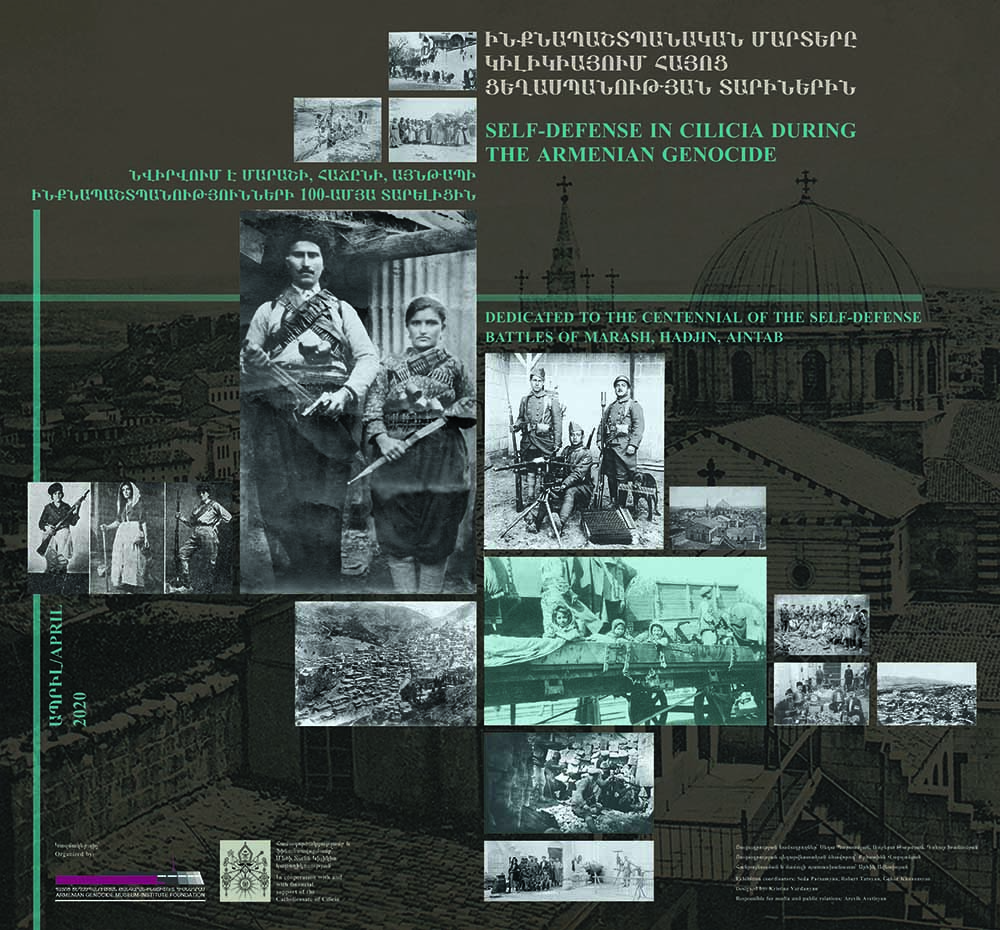
"ARMENIAN GENOCIDE AND SCANDINAVIAN RESPONSE"

Remember

remember
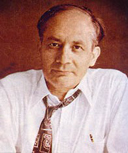
Haykazn Mihrdat was born in 1864 in Constantinople (Ottoman Empire), social-political figure, national deputy, president of the “Aharonyan akumb” (Aharonyan club) in Peshiqtash. He was a victim of the Armenian genocide.

Lemkin scholarship   new

Lemkin

Events of AGMI

November 10, 2011On November 9, 2011, the granddaughter of Fridtjof Nansen Marit Greve, with the Norwegian delegation, visited Tsitsernakaberd Memorial Complex ...

November 10, 2011On November 7, 2011, Asya Darbinyan, a graduate research fellow at the Armenian Genocide Museum-Institute, recently spent four days at the Armenian Research Center conducting research for her dissertation on Near East Relief orphanages ...

November 9, 2011On November 6, 2011, Grand Duchess Maria Vladimirovna Head of the Russian Imperial House visited Tsitsernakaberd Memorial Complex, put flowers at the eternal fire and honored the memory of the innocent victims with a minute of silence ...

October 25, 2011On October 25, 2011, the newly appointed U.S. Ambassador to Armenia John A. Heffern accompanied by his spouse Mrs. Libby Dowling Heffern, visited ...

October 13, 2011 On October 13, 2011, Secretary General of Interpol Ronald Noble visited Tsitsernakaberd Memorial Complex and put flowers at the memorial of the Armenian Genocide victims ...

August 31, 2011 On August 30, 2011, the regular meeting of the MFA senior staff and the heads of the diplomatic missions started in the Conference Hall of the K. Demirjian Sports and Concert Complex ...

August 27, 2011 Dr. Hayk Demoyan, director of the Armenian Genocide Museum-Institute, has become a new member of the Genocide Education Project’s (GenEd) advisory board ...

July 11, 2011 Fanny Ardant, the world known French actress, who visited Yerevan in the framework of the 8th edition of “Golden Apricot” Yerevan International Film Festival, visited Tsitsernakaberd Memorial ...

June 30, 2011 Director of AGMI H.Demoyan and Deputy Director of AGMI S.Manukyan had a meeting with ambassador of RA in Russia Oleg Yesayan in Moscow. During the meeting the projects and cooperation ...

June 17, 2011 Minister of French Cooperation Henri de Raincourt visited Tsitsernakaberd Memorial Complex, within the framework of his official visit to Armenia on June 16-17, and put a wreath at the memorial of the Armenian Genocide victims ...

June 17, 2011 The delegation headed by President of Brest Regional Executive Committee in Belarus Konstantin Sumar visited Tsitsernakaberd Memorial Complex. Mr. Konstantin Sumar put a wreath at the memorial of the Armenian Genocide victims ...

June 10, 2011 Thomas O. Melia, Deputy Assistant Secretary of USA, Bureau of Democracy, Human Rights, and Labor visited Tsitsernakaberd Memorial Complex, put flowers at the eternal fire ...

June 09, 2011 Dr. Ara Sanjian, the Associate Professor in Armenian and Middle Eastern History from University of Michigan - Dearborn had a meeting in the Armenian Genocide Museum & Institute with the staff of AGMI ...

June 01, 2011 The deputy-director of AGMI Suren Manukyan participated on conference dedicated to 150th anniversary of Fridtjof Nansens held in a city of Kharkiv, Ukraine ...

RA, Yerevan 0028
Memorial Complex of Tsitsernakaberd
Tel.: (374 10) 39 09 81
Fax: (374 10) 39 10 41
    2007-2011 © Armenian Genocide Museum-Institute     e-mail : info@genocide-museum.am