Online exhibition |
ARMENIAN SPORT LIFE IN THE PRE-WWI OTTOMAN EMPIRE

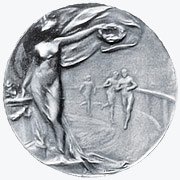
Silver medal which was granted to the winners of the Second Armenian Olympic games in 1912.
Armenian population in the Ottoman Empire before total uprooting as a consequence of premeditated and state–orchestrated genocide plan of the elimination of the Armenian nation on the territory of the Ottoman Turkey circa 1915 was among well modernized elements of the empire which although the segregationist and discriminative nature of the ottomans played significant role in the social, economical and cultural life of the empire.
The European influence and the acknowledgment with the traditions and principles of the European education triggered unprecedented activity in the sport life and sportive activity.
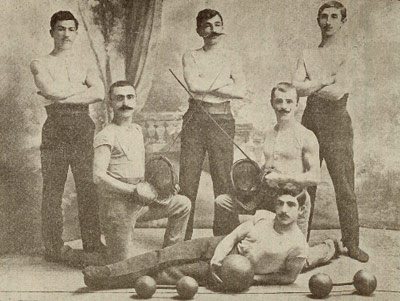
Enough to say that dozens of Armenian sport clubs and boy scout organizations appeared among the Armenian communities from Istanbul to Van, from Trabzon to Adana.
The first time in the history of Turkish Olympic games two Armenian sportsmen represented the Ottoman Turkey in the fifth international Olympic games in Stockholm in 1912 (those were Vahram Phapazyan and Mkrtich Mkryan). Many Armenian teams and individuals permanently scored victories and records in the multinational and intercommoned competitions and championships.
It’s interesting enough that from 1911 to 1914 four “Armenian Olympic games” were organized with the participation of all Armenian sport clubs. Winners of the competitions were awarded with silver medals.
The idea of creation of separate Armenian football league was not realized because of the WWI and subsequent start of genocide policy against the Ottoman Armenians, during which many Armenian sportsman became victims of the first genocide of the 20th century.
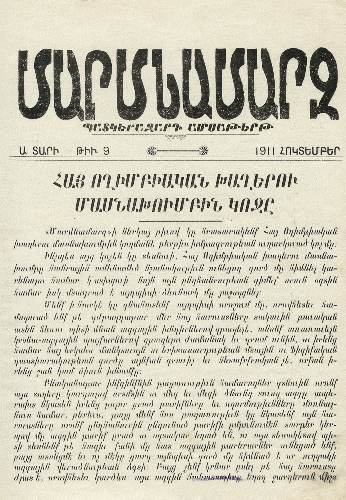
Appeal for the participation of the Armenian Olympic Games, “Marmnamarz”, 1911
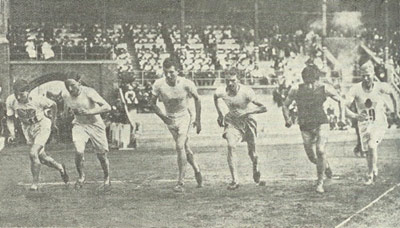
Fifth Olympic games in Stockholm, second from the right is the representative of the Ottoman
Empire Track and Field Team, runner Vahram Papazyan, “Marmnamarz”, July 5, 1912
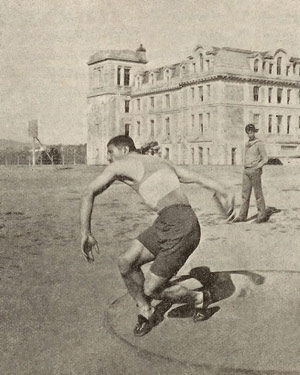
Mkrtich Mkryan, participant of the Fifth Olympic games in Stockholm, Robert College campus, “Marmnamarz”, July 5, 1912
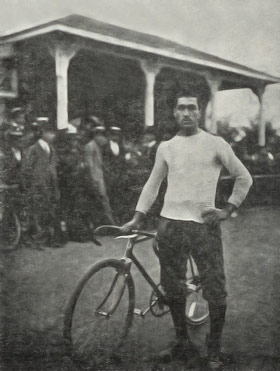
Vagharshak Varjapetyan, winner of the Armenian Olympic games and international competitions in Constantinople, bicyclist, “Marmnamarz”, 1911
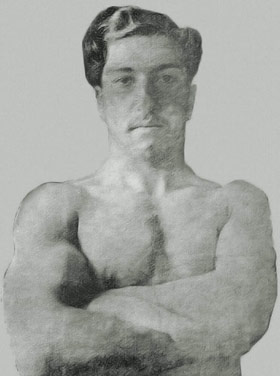
Vahram Papazyan, Fifth Olympic games in Stockholm, “Marmnamarz”, 1912
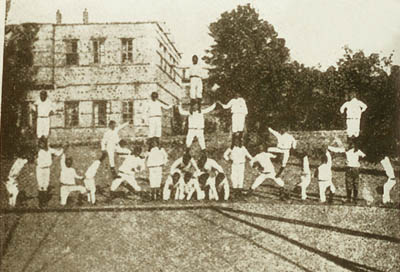
“Artsiv” (“Eagle”) athletic club of Trabizond, “Marmnamarz”, 1912
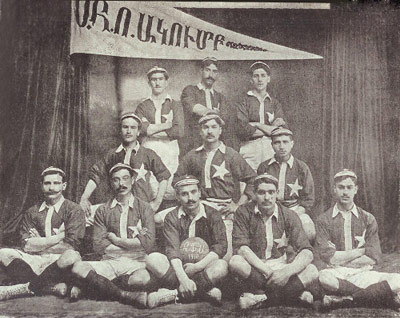
Football team of the Armenian hunting club of Izmir, “Marmnamarz”, 1910
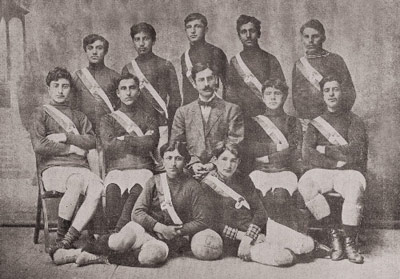
“Shavarshan” football team of American school of Marzvan, “Marmnamarz”, 1911
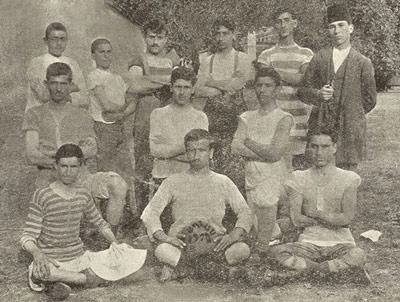
The football team and athletic club “Atlas” of Nikomedia, “Marmnamarz”, 1913
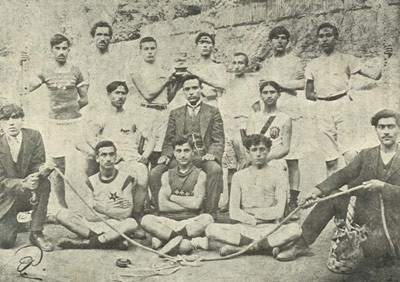
Sport team of Perperyan school, “Marmnamarz”, 1912
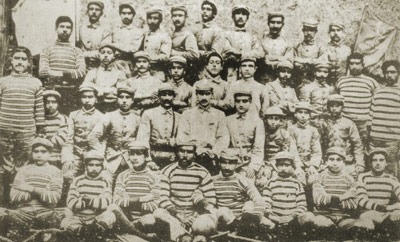
Members of the light athletic club “Partev”, Sebastia, 1900s (The majority of these people fell victim of the Armenian Genocide)
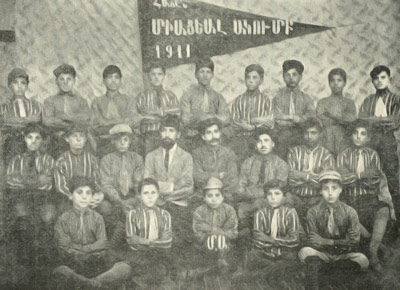
Football team of the “United club” of Hachn school, “Marmnamarz”, 1911
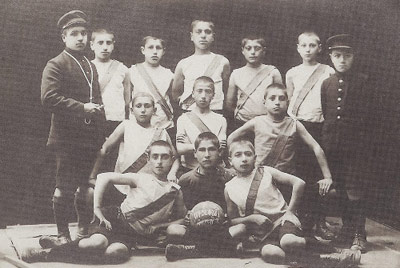
The Armenian Youth “Tsitsernak” football team, Istanbul, 1910s
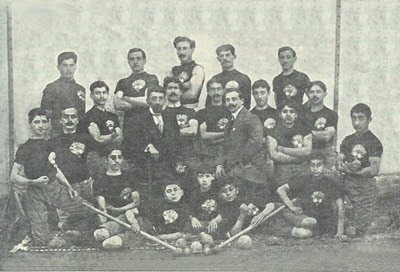
Athlete team “Vahagn” of Samatia, “Marmnamarz”, 1912
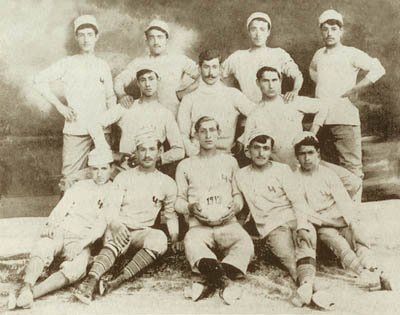
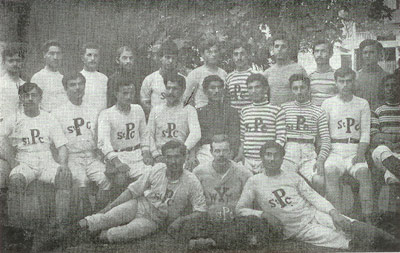
The football team of St. Poghos’ School of Tarson, 1914
|
|
VIRTUAL MUSEUM |
|
INTERNATIONAL CONFERENCE |
Armenian Genocide:
Challenges on the Eve of Centenary
Ani plaza, Ani hall
Yerevan, March 22-23
|
TEMPORARY EXHIBITION |
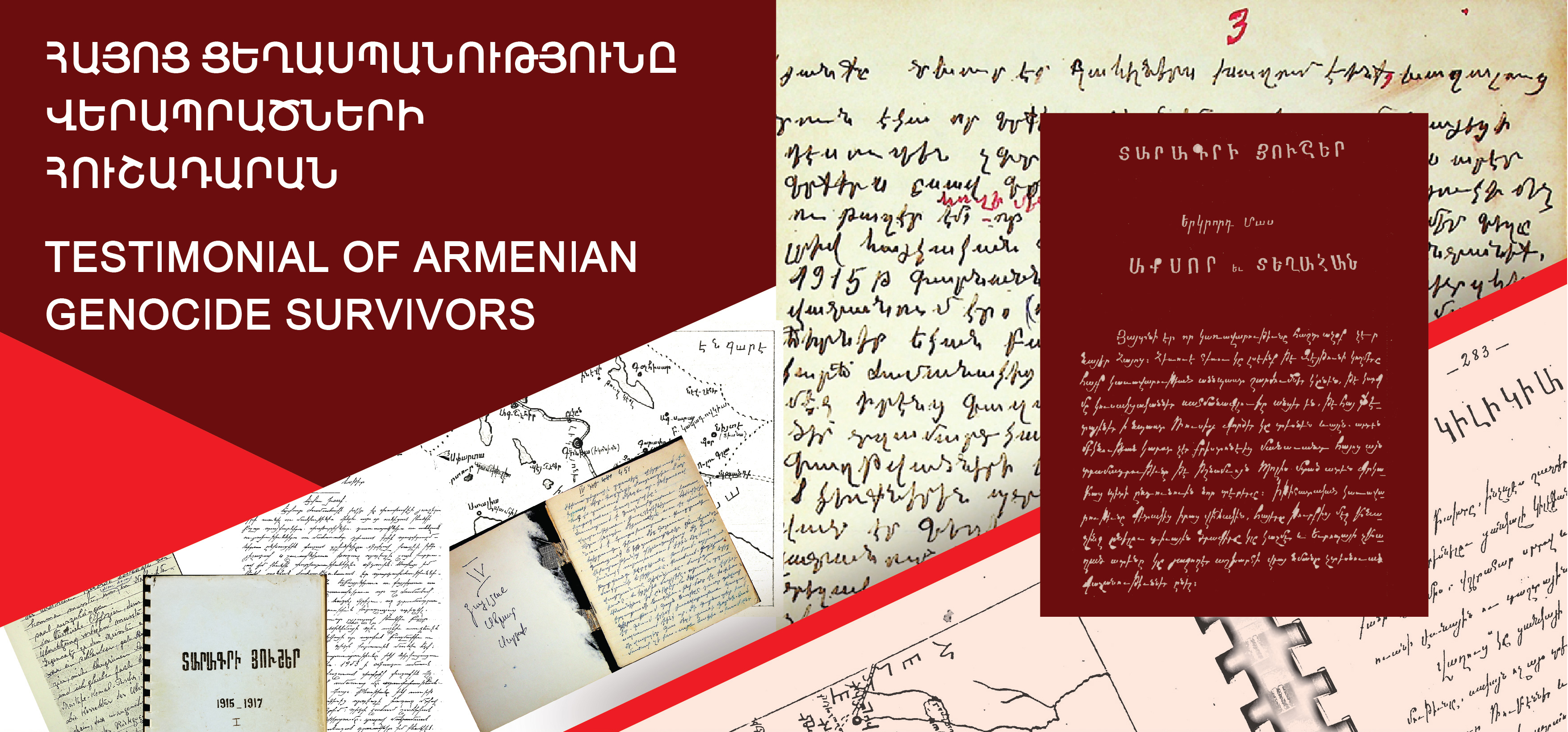
On April 23, 2012, AGMI presents a temporary exhibition titled “Book as a witness of the Genocide” dedicated to the 500th anniversary of the Armenian printing and proclamation of Yerevan as 2012 World Book Capital City by UNESCO. The temporary exhibition comprises more than 300 rare first editions and other sources on the subject of the Armenian Genocide.
|
SMYRNA DISASTER – 90 |
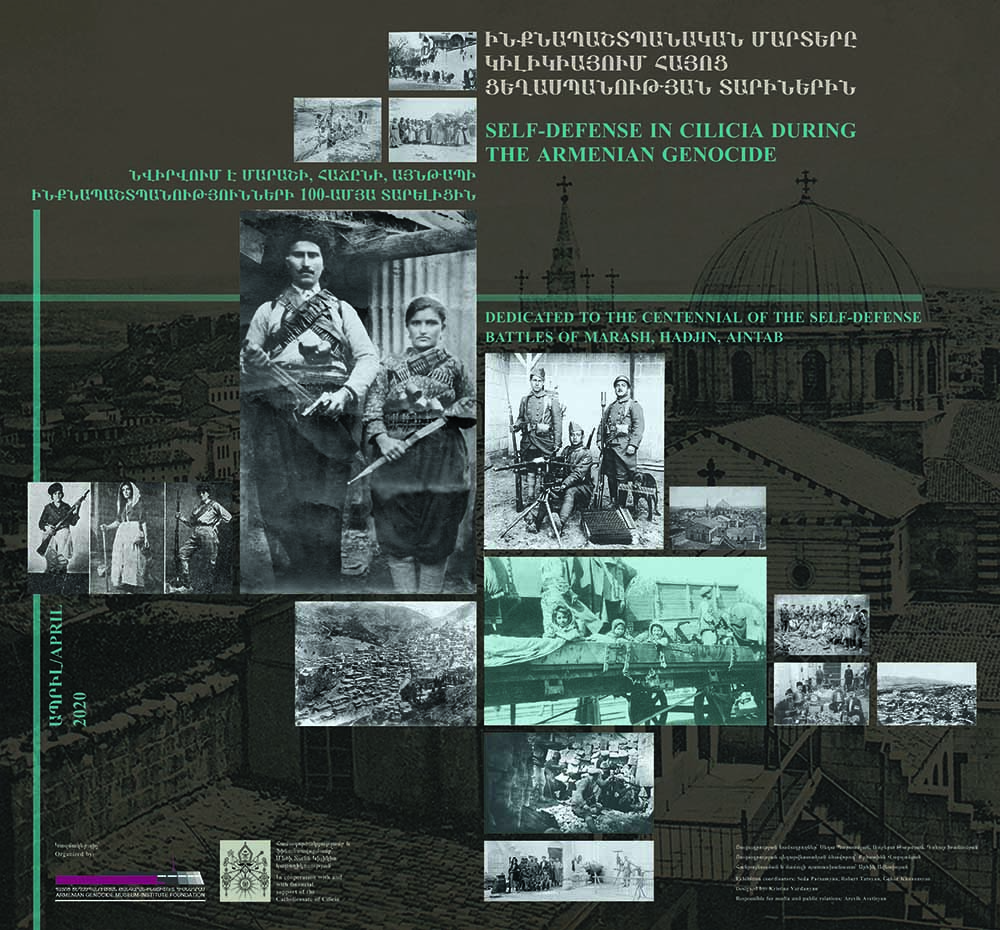
In September 2012 AGMI presents a temporary exhibition dedicated to the 90th anniversary of “Smyrna disaster” – destruction of the Christian population of Smyrna, one of the major sea ports of the Asia Minor. The fire of Smyrna becomes one of the dramatic episodes of the Armenian genocide carried out this time by Kemalist forces in September 1922.
|
INTERNATIONAL JOURNAL OF ARMENIAN GENOCIDE STUDIES |
|
REMEMBER |
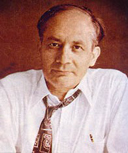
Aghababyan Levon was born in 1887 in Baghesh and graduated from the Sanasaryan College. From 1908 to 1914 he was first a teacher then a headmaster at the national colleges of Akshehir and Kutahya. He was a teacher of mathematics, opened a private school in Kutahya which worked for only three years and also was an editor of “Azatamart”. He was a victim of the Armenian Genocide.
|
LEMKIN SCHOLARSHIP |
|
EVENTS OF AGMI |
April 9, 2013 The Russian delegation headed by the Chief of Staff of the RF Presidential Administration Sergei Ivanov, which is in Armenia on the occasion of the inauguration of the President of the Republic of Armenia Serzh Sargsyan, visited Tsitsernakaberd Memorial Complex and put flowers at the Memorial of the Armenian Genocide victims ...
December 18, 2012 The world known French actor Alain Delon visited Tsitsernakaberd Memorial Complex ...
November 24, 2012 The Deputy Speaker of the National Assembly of Bashkiria Raphayil Zinurov Tsitsernakaberd Memorial Complex ...
September 25, 2012 Cardinal Kurt Koch, President of the Pontifical Council for Promoting Christian Unity, visited Tsitsernakaberd Memorial Complex. Cardinal Kurt Koch put flowers at the Eternal Fire and prayed for the repose of the victims’ souls...
June 15, 2012 The delegation of the Russian Institute of Strategic Studies (RISS), Moscow, headed by the director Leonid Reshetnikov and accompanied by Ruben Safrastyan...
May 1, 2012 Christos Malikkidas, the Permanent Secretary of Ministry of Defense of the Republic of Cyprus, visited Tsitsernakaberd Memorial Complex and put flowers at the Eternal...
April 24, 2012 Stephen W. Clark, Vice President, General Counsel and Secretary and Elizabeth Morrison, Acting Senior Curator of...
April 21, 2012 Minister of culture of Romania, Mr. Hunor Kelemen visited Tsitsernakaberd Memorial Complex...
April 17, 2012 A group of Turkish participants of USAID supported program on Turkish-Armenian dialogue...
|
|