Home Map E-mail
 
Eng |  Հայ |  Türk |   Рус   

Home
Main
Delegations
Site map
Feedback
Contacts
Links
Pre-Genocide Armenia
History of Armenia
Pre-Genocide photos
Armenian Genocide
What is Genocide
Armenian Genocide
Chronology
Photos of Armenian Genocide
Mapping Armenian Genocide
Cultural Genocide
Remember
Documents
American
British
German
Russian
French
Austrian
Turkish

Research
Bibliography
Survivors Stories
Eye-Witnesses
Media
Quotations
Public Lectures
Recognition
States
International organizations
Provincial governments
Public petitions
Mission Statement
Director`s message
Press-releases
Museum G-Brief
Interviews
News
Conferences
Events of AGMI
Lemkin's scholarship new
   Museum
Museum Info
Plan a visit
Permanent exhibition
Temporary exhibition
Online exhibition   new
Memorial postcards  new
   Institute
Goals & Endeavors
Publications
Library
   Tsitsernakaberd Complex
Description and History
Memorial complex photos
Remembrance day
Friends of AGMI Foundation
 

Armenian General Benevolent Union
All Armenian Fund
National Academy of Sciences of Armenia
Public Radio of Armenia
Armenian News Agency
The Armenian Genocide
Armenian News
Armenian News Agency
ARMEDIA  Information, Analytical Agency
Inhomage
armtown
qahana


Press-releases


18 June 2007

For Immediate Release

Massive strides carried out by united Armenian community reflected in 20th Anniversary jubilee of Armenian Genocide Resolution adopted by the European Parliament

On June 18th, 1987, the European Parliament adopted a resolution that clearly identified the atrocities committed against the ethnic Armenian population, executed by the Ottoman Turkish government, during 1915-1917, as Genocide. The Resolution also stated that democracy cannot be solidly implanted in a country unless the latter [Turkey] recognizes and enriches its history with its ethnic and cultural diversity. Although the Armenian Genocide Resolution, adopted by the European Parliament does not consider present day Turkey to be responsible for the tragedy experienced by the Armenians of the Ottoman Empire, the Council does however, call on the present Turkish Government to acknowledge the genocide perpetrated against the Armenians in 1915-1917. Furthermore, point 4 of the Resolution states: the refusal by [the] present Turkish Government to acknowledge the genocide against the Armenian people committed by [the] Young Turk Government, its reluctance to apply the principles of international law to its differences of opinion with Greece, the maintenance of Turkish occupation forces in Cyprus and the denial of existence of [the] Kurdish question, together with the lack of try parliamentary democracy and the failure to respect individual and collective freedoms, in particular of religion, in that country are insurmountable obstacles to consideration of the possibility of Turkey’s accession to the [European] Community.

Eighteen years later, in 2005 and almost 40 years after Turkey first applied for associate membership of EEC in 1959, Turkey finds herself with the same unresolved issues. Even if Turkey does everything it is asked to, membership is not a guarantee because the EU describes the negotiations as "an open-ended process, the outcome of which cannot be guaranteed beforehand". The local Armenian and international Armenian Diaspora’s efforts in the last 20 years have not gone unnoticed. A unified and coherent platform has brought to light the issue of the Armenian Genocide so much so that it is now a major leveraging point in Turkey’s potential entry into the EU.



Virtual Museum

International Conference

genocide
In April, 2010, AGMI organizes an international conference dedicated to the 95th anniversary of the Armenian genocide. The special focus of the conference will be on the cultural genocide of the Armenian heritage in Turkey.

Temporary exhibition at AGMI

ner
On April 22, 2010, The Armenian genocide museum opens a temporary exhibition titled “Armenian genocide: frontpage coverage in the foreign media”. The exhibition includes rare century old newspapers and magazines covering Armenian genocide on their frontpages.

Remember

remember
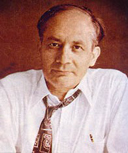
Shahen Atom was born in 1875 in Akn city (Kharberd province of Western Armenia), social-political figure, deputy of Akn. He was a victim of the Armenian genocide.

Lemkin's scholarship   new

Lemkin

Events of AGMI


July 09, 2010Today the delegation headed by Foreign Affairs State Secretary of the Swiss Confederation Peter Maurer visited Tsitsernakaberd Memorial complex ...

June 23, 2010The Faith and Order Standing Commission of the World Council of Churches (WCC) arriving to Armenia with an invitation of His Holiness Karekin II ...

June 18, 2010 A group of Turkish journalists visiting Armenia by the initiative of ‘International Hrant Dink Foundation’ ...

June 05, 2010 The Italian delegation headed by the chairman of the provincial council of Milan Bruno Dupei visited ...

June 03-04, 2010 Deputy Director of AGMI Suren Manukyan took part in International Seminar: ...

May 31, 2010 CSTO PA Council delegation led by Russian State Duma speaker Boris Gryzlov visited Armenian Genocide victims memorial ...

May 22, 2010 The delegation headed by the president of “Europe de la Memoire” Organization Alexis Govchian visited Tsitsernakaberd ...

May 21, 2010 MD of Slovakia’s parliament member Frantisek Miklosko visited Tsitsernakaberd ...

May 21, 2010 Patrick Devedjian visited Tsitsernakaberd Memorial complex ...

May 20, 2010 Governor of Orenburg region of Russian Federation Mr. Alexey Chernyshov visited Tsitsernakaberd ...

May 19, 2010 The delegation of bishops from the Christian churches in Damaskos visited Tsitsernakaberd ...

May 19, 2010 On the occasion of the massacre of Pontian Greeks the Greek community of Armenia visited Tsitsernakaberd ...

May 19, 2010 Meeting-discussion with Director of the Armenian Genocide Museum-Institute Hayk Demoyan ...

May 15, 2010 The delegation headed by the chairman of the Culture’s Commission of Austrian parliament visited Tsitsernakaberd ...

May 13, 2010 The representatives of Poghosyan family visited Tsitsernakaberd...

RA, Yerevan 0028
Memorial Complex of Tsitsernakaberd
Tel.: (374 10) 39 09 81
Fax: (374 10) 39 10 41
    2007-2010 © Armenian Genocide Museum-Institute     e-mail : info@genocide-museum.am